What Matters To You After a Serious Injury in Franklin Square?
After a serious injury in Franklin Square, the first question is not simply whether an adjuster says a pedestrian crossed improperly or a driver entered an intersection at the wrong time. Those might be true, but such assertions matter only if the insurance adjuster can back them up. The important question is what the evidence shows about responsibility, medical causation and the losses caused by the injury.
Franklin Square presents two local conditions that can become important when responsibility is disputed: park-adjacent crossings and multi-directional intersections where vehicles or pedestrians may approach a potential conflict from more than one direction.
Neither condition proves fault. They matter because an insurance company may contend that an injured person entered unexpectedly, failed to yield, should have seen another vehicle sooner or otherwise had enough time to avoid the collision.
If the carrier uses one of those propositions to limit or deny compensation, the case may be developing into an insurance dispute.
The first task is identifying the specific form of insurance resistance. The next—and more important—task is devising the offense against it.
Why Can a Franklin Square Injury Claim Become an Insurance Dispute?
Insurance resistance is the term I use to describe the different positions, arguments, defenses, valuation decisions and claim mechanisms through which an insurance company may challenge, delay, narrow, reduce or deny payment on an injury claim.
A complete denial is not required. The carrier may accept that a collision occurred while disputing who caused it. It may accept responsibility but contest whether the accident caused all of the claimed injuries. It may accept both liability and causation while disputing treatment, lost wages, permanency, future care or the overall value of the claim.
The useful question is therefore not merely:
“Did the insurance company deny my claim?”
The more useful questions are:
What specifically is the insurance company resisting? What is it relying on? And what strategy, tactics, evidence and arguments can be developed to challenge that position?
Quick Answer: What Can Control a Franklin Square Personal Injury Claim?
Short Answer: A Franklin Square injury claim may turn on responsibility, medical causation, damages and whether the evidence supports the particular position the insurance company is using to limit the claim.
Primary Risk: A carrier may focus on the crossing or intersection sequence and argue that the injured person entered improperly, failed to yield or had sufficient opportunity to avoid the collision.
Insurance Position: Depending on the claim, the insurer may raise claimant fault, contributory negligence, failure to avoid the accident, disputed medical causation or reduced claim value.
Franklin Square Factors: The two local conditions analyzed on this page are park-adjacent crossings and multi-directional intersections.
Decision Logic: Identify the insurer’s exact theory, determine what facts it assumes, and develop the strategy and proof necessary to test those assumptions.
Next Evaluation Step: Determine whether the principal dispute concerns responsibility, medical causation, damages, insurance coverage or several issues simultaneously.
How Can Franklin Square’s Park-Adjacent Crossings Affect a Fault Dispute?
A park changes the relationship between the roadway and pedestrian movement. The legal significance is not that Franklin Square Park makes an accident more likely. The significance is that a collision near a park-adjacent crossing can produce a factual dispute over exactly where a pedestrian or vehicle was located and when a developing conflict became visible.
An insurer may contend that a pedestrian entered unexpectedly, crossed outside the expected path or gave a driver insufficient time to react. In another case, the dispute may run the other direction: whether the driver had enough visibility and distance to perceive a person already moving through the crossing area.
The crossing location itself does not answer those questions. The sequence does.
That can make crosswalk location, traffic controls, sightlines, parked vehicles, approach direction, speed, impact location, video and witness observations materially important.
Why Can a Multi-Directional Intersection Change the Analysis?
At a multi-directional intersection, a later description such as “the other driver entered in front of me” may compress several separate factual questions into one conclusion.
Each vehicle may have approached from a different direction. One may have been turning while another continued through. A pedestrian may have been crossing at the same time. Traffic controls, vehicle positions and lines of sight may have affected what each participant could perceive.
If responsibility is disputed, the useful reconstruction asks:
Who approached from where? → What controlled each movement? → When did each participant become visible? → Who entered the conflict area first? → What time and distance remained for reaction?
That sequence can be much more important than the insurance company’s shorthand description of the collision.
How Can Franklin Square Conditions Affect the Insurance Dispute?
| Franklin Square Condition | Possible Insurance Position | Strategic Offense | Evidence or Tools That May Matter |
|---|---|---|---|
| Park-adjacent crossings | The pedestrian entered unexpectedly, crossed outside the expected path, should have seen the vehicle or had sufficient opportunity to avoid impact. | Reconstruct the crossing path, visibility and perception-reaction sequence and test whether the claimant-fault theory fits what actually occurred. | Crosswalk and traffic-control evidence, approach photographs, sightlines, video, vehicle position, point of impact and witnesses. |
| Multi-directional intersections | The claimant entered improperly, failed to yield, misread traffic approaching from another direction or could have avoided the collision. | Reconstruct each approach, the traffic controls, vehicle paths and intersection timing to determine whether the insurer’s simplified sequence withstands the physical evidence. | Signal or control information, lane markings, video, vehicle positions, damage patterns, impact location, photographs and witness accounts. |
How Do I Determine Whether the Insurance Company’s Position Fits the Evidence?
I first reduce the insurance company’s conclusion into the individual factual propositions on which it depends.
If the insurer says a pedestrian appeared suddenly, I want to know where the pedestrian was before entering the conflict area, what the driver could see and how much time and distance remained.
If the carrier says a driver entered an intersection improperly, I want to know each approach direction, the applicable traffic controls, vehicle positions, turning movements and point of impact.
If it says the claimant could have avoided the accident, I want to know exactly what avoidance opportunity that conclusion assumes.
An adjuster can decide what the insurance company is willing to pay voluntarily. An adjuster does not decide the ultimate facts merely by taking a position on them.
A claim-file conclusion should therefore be tested against the available evidence rather than treated as though the underlying issue has already been adjudicated.
How Do I Develop the Offense Against Insurance Resistance?
Identifying insurance resistance is only the beginning. The particular offense depends on the particular resistance.
If the carrier relies on a pedestrian-fault theory, the offense may require reconstructing the crossing path, sightlines, traffic controls, speed and perception-reaction sequence.
If it relies on an intersection right-of-way or avoidability theory, the strategy may involve vehicle positioning, approach angles, video, damage patterns, impact location and witness testimony.
If the insurance fight concerns medical causation, that offense is different. Medical chronology, prior records, diagnostic findings, treating-provider evidence and evidence of functional change may become central.
If the dispute concerns value, the strategy changes again. Lost income, physical limitations, permanency, future treatment and the effect of the injury on work and ordinary life may need to be developed and presented differently.
Depending on the dispute, the response may involve factual development, medical proof, legal arguments, negotiation positions, deposition examination, expert analysis, discovery, motions, mediation or trial strategy.
The objective is not merely to disagree with the adjuster. It is to identify the position suppressing the claim, determine how to attack or weaken it, and develop the affirmative case necessary to pursue the compensation the evidence supports.
How Do I Determine Whether the Insurance Company’s Position Fits the Evidence?
I first reduce the insurance company’s conclusion into the individual factual propositions on which it depends.
If the insurer says a pedestrian appeared suddenly, I want to know where the pedestrian was before entering the conflict area, what the driver could see and how much time and distance remained.
If the carrier says a driver entered an intersection improperly, I want to know each approach direction, the applicable traffic controls, vehicle positions, turning movements and point of impact.
If it says the claimant could have avoided the accident, I want to know exactly what avoidance opportunity that conclusion assumes.
An adjuster can decide what the insurance company is willing to pay voluntarily. An adjuster does not decide the ultimate facts merely by taking a position on them.
A claim-file conclusion should therefore be tested against the available evidence rather than treated as though the underlying issue has already been adjudicated.
How Do I Develop the Offense Against Insurance Resistance?
Identifying insurance resistance is only the beginning. The particular offense depends on the particular resistance.
If the carrier relies on a pedestrian-fault theory, the offense may require reconstructing the crossing path, sightlines, traffic controls, speed and perception-reaction sequence.
If it relies on an intersection right-of-way or avoidability theory, the strategy may involve vehicle positioning, approach angles, video, damage patterns, impact location and witness testimony.
If the insurance fight concerns medical causation, that offense is different. Medical chronology, prior records, diagnostic findings, treating-provider evidence and evidence of functional change may become central.
If the dispute concerns value, the strategy changes again. Lost income, physical limitations, permanency, future treatment and the effect of the injury on work and ordinary life may need to be developed and presented differently.
Depending on the dispute, the response may involve factual development, medical proof, legal arguments, negotiation positions, deposition examination, expert analysis, discovery, motions, mediation or trial strategy.
The objective is not merely to disagree with the adjuster. It is to identify the position suppressing the claim, determine how to attack or weaken it, and develop the affirmative case necessary to pursue the compensation the evidence supports.
How Do I Determine Whether the Insurance Company’s Position Fits the Evidence?
I first reduce the insurance company’s conclusion into the individual factual propositions on which it depends.
If the insurer says a pedestrian appeared suddenly, I want to know where the pedestrian was before entering the conflict area, what the driver could see and how much time and distance remained.
If the carrier says a driver entered an intersection improperly, I want to know each approach direction, the applicable traffic controls, vehicle positions, turning movements and point of impact.
If it says the claimant could have avoided the accident, I want to know exactly what avoidance opportunity that conclusion assumes.
An adjuster can decide what the insurance company is willing to pay voluntarily. An adjuster does not decide the ultimate facts merely by taking a position on them.
A claim-file conclusion should therefore be tested against the available evidence rather than treated as though the underlying issue has already been adjudicated.
How Do I Develop the Offense Against Insurance Resistance?
Identifying insurance resistance is only the beginning. The particular offense depends on the particular resistance.
If the carrier relies on a pedestrian-fault theory, the offense may require reconstructing the crossing path, sightlines, traffic controls, speed and perception-reaction sequence.
If it relies on an intersection right-of-way or avoidability theory, the strategy may involve vehicle positioning, approach angles, video, damage patterns, impact location and witness testimony.
If the insurance fight concerns medical causation, that offense is different. Medical chronology, prior records, diagnostic findings, treating-provider evidence and evidence of functional change may become central.
If the dispute concerns value, the strategy changes again. Lost income, physical limitations, permanency, future treatment and the effect of the injury on work and ordinary life may need to be developed and presented differently.
Depending on the dispute, the response may involve factual development, medical proof, legal arguments, negotiation positions, deposition examination, expert analysis, discovery, motions, mediation or trial strategy.
The objective is not merely to disagree with the adjuster. It is to identify the position suppressing the claim, determine how to attack or weaken it, and develop the affirmative case necessary to pursue the compensation the evidence supports.
“The first step is identifying the specific form of insurance resistance affecting the claim—the specific defenses, arguments and positions the insurer is using to deny you full and fair compensation.
The second, more vital level is developing the strategies, tactics, methods and arguments to challenge and overcome that denial, delay or evaluation.
I analyze what the insurance company is relying on, identify the evidence that matters, and develop the factual, medical, legal, negotiation and litigation arguments necessary to attack or weaken that position and pursue the compensation the evidence supports through legal challenges and trial in Maryland courtrooms.”
What Evidence Can Be Used to Carry Out That Strategy?
The right evidence depends on what the insurer is resisting.
A park-adjacent pedestrian dispute may require crossing-location evidence, traffic controls, sightline photographs, video, witnesses, vehicle position and impact location.
A multi-directional intersection dispute may require reconstruction of each approach, lane or turning movement, traffic controls, vehicle damage and the sequence immediately before impact.
The objective is not to collect every conceivable document.
Identify the insurer’s premise and develop the evidence that tests that premise.
What If Fault Is Accepted but the Insurance Company Disputes My Injury?
Then the case has shifted from a responsibility dispute to a medical-causation dispute.
The carrier may acknowledge that another person caused the collision but question whether all claimed symptoms, diagnoses, treatment or future problems resulted from it.
The insurer may focus on a prior medical condition, a treatment gap, delayed symptoms, degenerative findings or the relationship between the mechanism of the accident and the claimed injury.
The injured person still bears the burden of proving the accident-related injury or aggravation being claimed.
The strategic sequence becomes:
Pre-accident baseline → collision → symptoms → medical evaluation → diagnostic evidence → treatment → functional change → continuing consequences.
The offense against the causation position may therefore involve prior and post-accident medical evidence, treatment chronology, diagnostic findings, treating-provider testimony and evidence establishing what actually changed after the collision.
What If the Insurance Company Accepts the Injury but Says the Claim Is Worth Less?
Then the principal insurance dispute is valuation.
The carrier may accept responsibility and medical causation while assigning substantially less value to lost income, pain, physical limitations, permanency, future treatment or the effect of the injury on ordinary life.
That requires another strategic shift.
The question becomes:
Which component of the loss is the insurer discounting, what assumptions produce that evaluation, and what evidence supports a different valuation?
Who Determines Compensation in a Franklin Square Injury Claim?
An insurance adjuster determines what the carrier is willing to offer voluntarily. That is different from determining the ultimate facts or the amount that may be established through the legal process. In this video, I discuss how compensation is evaluated and how settlement and court proceedings represent different paths to resolution.
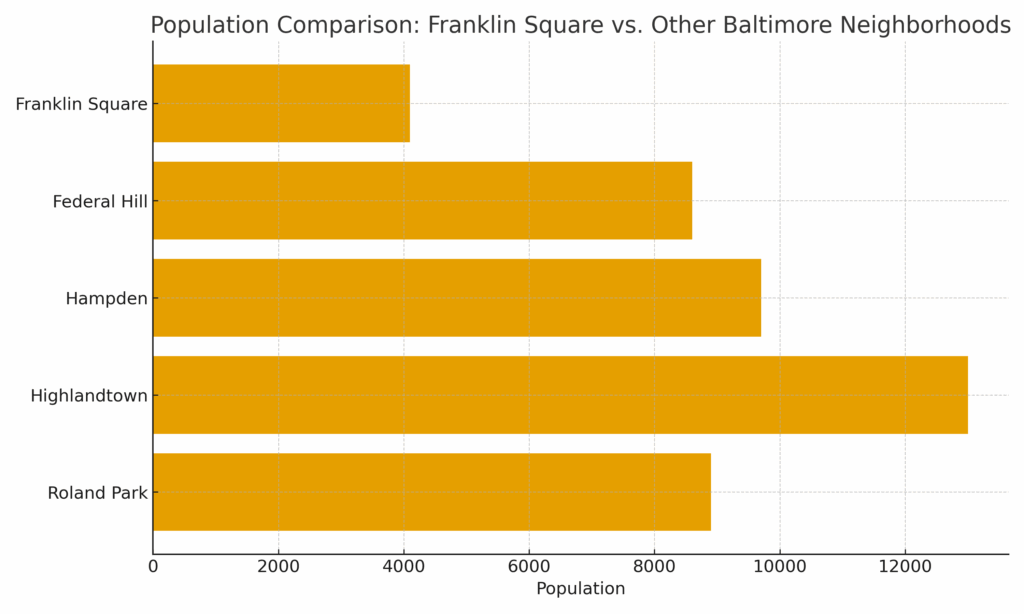
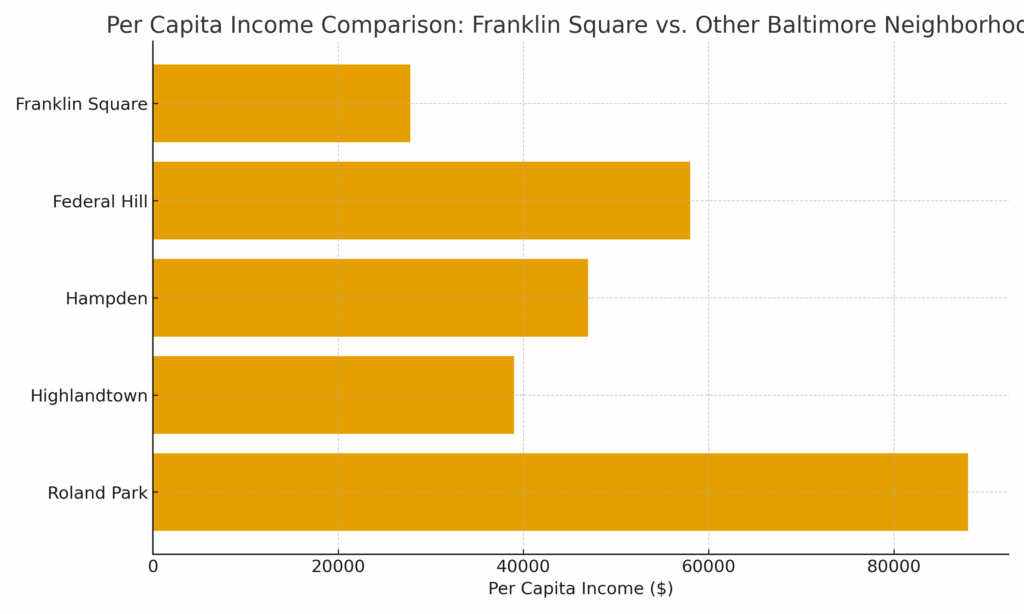
Franklin Square 21223 ZIP-Proxy Snapshot
These figures describe ZIP Code 21223 and are provided only as geographic context. ZIP-code statistics are not a measurement of Franklin Square alone and do not establish accident frequency, fault, injury severity or claim value.
| Metric | 21223 ZIP Proxy | Use on This Page |
|---|---|---|
| Population | 19,572 | ZIP-level geographic context only |
| Per Capita Income | $29,114 | ZIP-level geographic context only |
What If the Injury Changes Work or Daily Life?
The consequences of an injury are not necessarily captured by the amount of the medical bills.
Depending on the injury, damages may involve changes in work capacity, household activity, family responsibilities, mobility, recreation, sleep, independence or future medical needs.
If those consequences actually exist, they should be documented accurately and connected to the accident-related injury.
If an insurer evaluates the case primarily through diagnoses and medical charges, evidence showing the injury’s functional and economic consequences may materially affect the valuation analysis.
What If the Other Driver Is Uninsured or Cannot Be Identified?
A serious collision can involve a separate insurance issue if the responsible driver has no applicable liability insurance, insufficient coverage, or cannot be identified after a hit-and-run.
Depending on the policy and the facts, uninsured or underinsured motorist coverage may become part of the analysis.
That changes the insurance relationship. Instead of dealing exclusively with another driver’s liability carrier, the injured person may also have a first-party claim involving the person’s own automobile insurer.
The issues may then include coverage, compliance with policy requirements, responsibility, medical causation and damages.
The resistance may come from a different insurer, but the methodology remains the same: identify the exact position, determine what it depends on, and develop the appropriate offense against it.
When Does a Franklin Square Injury Claim Become an Insurance Dispute?
A claim can become disputed without a complete denial.
The transition may occur when the insurance company adopts a position that materially limits what it is willing to pay on responsibility, contributory negligence, medical causation, treatment, credibility, documentation, damages, coverage or overall value.
Some requests for information or additional documentation are ordinary parts of claim handling. A request by itself does not establish insurance resistance.
But once the carrier connects those issues to a specific position that suppresses payment, the claim may be moving from routine adjustment into an adversarial dispute.
The practical sequence becomes:
Identify what is accepted → identify what is disputed → diagnose the resistance → devise the offense → develop the proof → negotiate → litigate when warranted.
What If the Insurance Company Will Not Change Its Position?
The claims process gives the insurance company control over what it will voluntarily offer.
It does not give the adjuster authority to make a judicial determination of the disputed facts.
If a supported injury claim cannot be resolved because the insurer maintains a position that the evidence does not justify, litigation may become the mechanism for challenging that position.
In an ordinary third-party personal injury case, the lawsuit is generally brought against the person or entity alleged to be legally responsible rather than simply against that person’s liability insurance company.
Litigation can permit disputed positions to be tested through discovery, documents, sworn testimony, medical evidence, expert analysis, motions, mediation and trial.
The insurance company can take a position. Litigation can require that position to withstand evidence.
The purpose of the offense is therefore not simply to answer the adjuster. It is to use the appropriate factual, medical, legal, negotiation and litigation tools to challenge the resistance and pursue the compensation the evidence supports.
Franklin Square’s park-adjacent crossings and multi-directional intersections can turn a collision into a dispute over when a pedestrian or vehicle became visible, who entered the conflict area first and what opportunity existed to react. If the carrier uses that sequence to argue that the injured person failed to yield, entered unexpectedly or could have avoided the impact, insurance resistance begins with the insurer’s particular theory—not merely its conclusion.
I identify that theory, determine where it can be attacked, and develop the factual and legal offense using crossing geometry, traffic controls, approach photographs, video, vehicle positions, impact evidence, witnesses and, when warranted, litigation. The particular offense depends on the particular resistance.
Call Eric T. Kirk: 410-591-2835Why is the insurance company saying this?
The carrier may believe a particular fact supports a position on responsibility, medical causation or value.
In a Franklin Square accident, that may involve where a pedestrian crossed, how vehicles approached a multi-directional intersection, which participant entered the conflict area first, or whether someone had sufficient time to react. The important task is identifying the precise theory rather than responding to a generalized denial.
What evidence matters?
The evidence depends on the resistance being challenged.
A crossing dispute may involve crosswalk location, traffic controls, photographs, sightlines, video, witnesses and point of impact. An intersection dispute may require vehicle paths, approach directions, controls and physical damage. A causation or valuation dispute requires different medical and damages evidence.
Can I still recover?
Possibly. The answer depends on responsibility, medical causation, damages and any applicable defenses.
If the insurance company alleges that the injured person contributed to the accident, that issue can become significant under Maryland contributory-negligence law. The insurer’s allegation itself, however, is not a judicial finding.
What happens next?
Determine what the insurance company accepts and what it disputes.
Then identify the mechanism of resistance, determine the evidence bearing on it and devise the appropriate response. Depending on the dispute, the next step may involve additional claim development, negotiation or litigation.
Who decides?
An adjuster decides what the insurance company is willing to pay voluntarily.
The adjuster’s conclusion does not itself determine the ultimate disputed facts. If the matter proceeds through litigation, those issues can be tested through evidence and the legal process and, when necessary, determined by the appropriate factfinder.
Do I need a lawyer?
Not every personal injury claim requires representation.
Representation may become more important when the injuries are serious, responsibility is contested, contributory negligence is alleged, medical causation is disputed, substantial future losses exist, insurance coverage is uncertain or the carrier maintains a materially reduced valuation.
What if settlement fails?
Depending on the claim and available evidence, litigation may become appropriate.
In an ordinary third-party injury case, suit generally proceeds against the person or entity alleged to be legally responsible. Discovery, documents, sworn testimony, medical evidence, experts, mediation and trial may then be used to test the disputed positions.
What are the risks of waiting?
Relevant evidence may become harder to obtain.
Video may be overwritten, witnesses may become more difficult to locate, vehicles may be repaired and scene conditions may change. Medical chronology also begins developing immediately. Any applicable filing, notice or policy requirement must be evaluated separately for the particular claim.
Baltimore Personal Injury and Insurance Dispute Resources
Issues That May Change a Franklin Square Injury Claim
Martin Luther King Jr. Boulevard and Franklin Square Accident Evidence
A collision involving Martin Luther King Jr. Boulevard may present different lane, turning, merging and traffic-volume issues from a collision occurring on a smaller Franklin Square street.
The precise roadway matters because the physical configuration can affect the insurer’s fault theory and the evidence needed to test it. For broader Baltimore roadway analysis, see Baltimore roadways that shape car accident and injury claims .
Has the Insurance Company Taken a Position That Limits Your Franklin Square Injury Claim?
If the carrier says you entered an intersection improperly, crossed unexpectedly, failed to yield, could have avoided the collision, were not injured as claimed, or are seeking more than the claim is worth, the first question is exactly what factual, medical or valuation premise supports that position.
The next question is strategic: what evidence, arguments and legal tools can be developed to attack or weaken it? I identify the resistance, develop the offense appropriate to that resistance, and pursue the compensation the available facts and evidence support.
Call Eric T. Kirk: 410-591-2835