TL;DR — Belair-Edison Car Accident Claims (21213)
- Belair-Edison sits along high-volume east–west corridors where insurers routinely dispute speed, right-of-way, and injury timing.
- Early medical documentation and fast evidence capture (video overwrite risk) matter more here than most neighborhoods.
- Maryland’s contributory negligence rule gives carriers leverage; process mistakes cost claims.
- This page explains how claims actually get evaluated, not marketing fluff.
Belair-Edison Car Accident Lawyer — Baltimore (21213)
If you’re injured in a car accident in Belair-Edison, the fight isn’t just about who hit whom. It’s about how the insurance carrier evaluates its risk, what evidence exists before it disappears, and whether early missteps give the defense room to delay or deny.
Belair-Edison’s traffic patterns—commuter cut-throughs, bus traffic, and signal-heavy intersections—create frequent recurring insurance defenses. Knowing how those defenses may work is the difference between a stalled claim and a viable one.
- This page explains common mistakes people make after car accidents in Belair-Edison (Baltimore 21213) that influence how injury claims are evaluated.
- It highlights actions after a crash that insurers use to justify low offers, disputes, or delays.
- It clarifies why documentation, consistent treatment, and reporting matter for claim credibility.
- It ties local traffic and collision patterns in the Belair-Edison area to common insurer evaluation tactics.
- It outlines what adjusters look for without promising results or legal outcomes.
Belair-Edison Car Accident Claims. Common Mistakes — Baltimore Belair-Edison (21213)
In this video, a Baltimore personal injury lawyer explains common mistakes people make after Belair-Edison car accidents and why those mistakes matter to insurance companies evaluating injury claims in the 21213 area.
Video Transcript: Belair-Edison Car Accident Claims. Common Mistakes — Baltimore Belair-Edison (21213).
Eric T. Kirk, Baltimore Personal Injury Lawyer, explains a common insurance-related mistake people make in Bel Air and across Baltimore.
I’ve handled thousands of cases over the years, and one mistake that I’ve seen my clients make is failing to cooperate with their own insurance company, and in some instances that failure to cooperate can cost an insured person their case against their insurance company. Most people have a sense that an insurance contract is just that — a contract between the insurance company and the insured person — and both have duties under that contract. One important duty on behalf of the insured person is to cooperate fully with their insurance company in the investigation of the loss. A common requirement is that the insured individual submit to an examination under oath and perhaps produce documents. When the insured person fails to do that, the insurance company may be justified in taking the position that the insured has failed to cooperate, and in reliance on that, the insurance company may deny the claim.
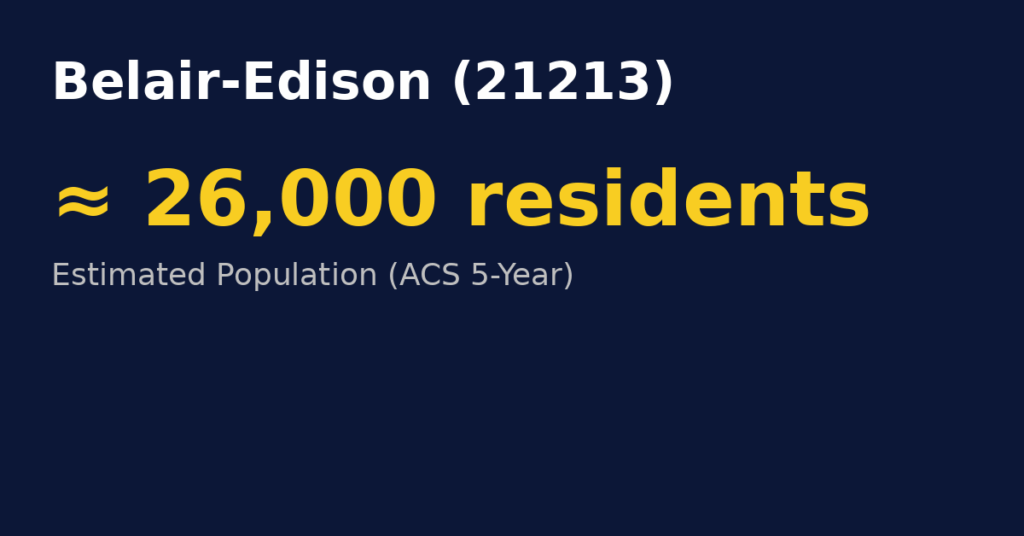

Accident Pattern & Traffic Summary — Belair-Edison (APTS)
Belair-Edison is framed by arterial streets feeding downtown and East Baltimore, with steady weekday congestion and weekend spillover traffic. Insurers commonly point to:
- Stop-and-go rear-end chains where the carrier argues “minor impact” despite documented injury.
- Signalized intersections where adjusters contest yellow-light timing and following distance.
- Bus lanes and curb activity used to argue sudden stops or driver distraction.
Street design does not “cause” accidents—but traffic behavior, visibility, and enforcement gaps shape how carriers defend them.
Illustrative Hypothetical — Belair-Edison (Example Only)
This scenario is illustrative only and not a real case.
A driver is rear-ended near a signalized corridor during evening congestion. The insurer acknowledges contact but delays, claiming low speed and “minimal damage.”, and a need to “talk to their insured” Nearby business cameras overwrite within days. Medical care begins weeks later. The carrier then argues gap-in-treatment and no objective injury—not because liability is unclear, but because process timing favors denial.
This is how claims fail—not at impact, but after.
Why Prompt Medical Attention Can Matter After a Belair-Edison Crash
The insurance adjuster is signed to your case does not need additional reasons to minimize underpay or outright deny your personal injury case. Don’t give them one. From an insurance perspective, delays create arguments. Immediate evaluation documents symptoms before adjusters can claim coincidence, degeneration, or unrelated causes. Medical care isn’t just health-wise smart—it locks in contemporaneous records that carriers look for when deciding whether to pay or fight.
How Insurers Defend Belair-Edison Claims
Carriers routinely rely on:
- Contributory negligence framing (any plaintiff fault bars recovery in Maryland).
- Impact-versus-injury arguments tied to bumper damage photos.
- Treatment timing scrutiny to undermine causation/ and or severity.
- Recorded statement inconsistencies taken early and replayed later. Baltimore lawyers and judges routinely say “credibility is always an issue:
Understanding these mechanics matters more than slogans.
What to Preserve Immediately After a Belair-Edison Accident
- Scene photos before vehicles move
- Dashcam and nearby business video (time-sensitive)
- Vehicle damage from multiple angles
- Names of responding officers and witnesses
- First medical evaluation notes
Evidence loss—not fault—is often what kills claims.
Yoast How-To — How to Preserve Video Evidence After a Belair-Edison Car Accident
- Identify nearby businesses, residences, and buses within one block.
I’ve taken to advising my personal injury client to photograph the photographers/ to record the recorders. In other words take pictures of devices that might have taken pictures of the event so that we can find them later.
- Note camera types (fixed, doorbell, transit).
The photographs that I mentioned in the preceding how to guidance to the extent possible could also contain the technical information about the camera or recording device if you can get access to it: Manufacturer, serial numbers, model numbers, contact information. All can be important in a Bel Air Edison personal injury case
- Act fast—many systems overwrite within days.
It’s impossible to reliably predict what a private entity would do with their own internal proprietary surveillance system in terms of voluntary evidence preservation and overwrite loops. We can find some guidance in what government agencies suggest. Government data retention is governed by a patchwork of rules that vary based on the nature of the recording. For instance, New Jersey mandates a short 30-day window for public meeting videos, whereas the Washington Secretary of State requires 90 days for law enforcement radio and dispatch transmissions. Standard law enforcement records, as noted by MRSC, often demand a much longer three-year period or must wait until an audit is finalized. While states like Texas
and Florida typically set a 90-day baseline for body-worn camera footage, these timelines expand drastically for criminal investigations. This spectrum of policies ensures that critical evidence is preserved while allowing routine administrative data to be purged regularly. - Preserve your own dashcam and phone data immediately.
It makes sense that if you’re going to preserve evidence at somebody else has that you employ all measures to preserve the evidence that you have. This ties in well with the “don’t give the insurance company additional tools” to delay deny disclaim or underpay on your case.
- Document requests and responses in writing.
The denial letter that you will receive from an insurance company- if they have chosen to deny your claim on contributory negligence or other grounds- is a vital document.
Frequently Asked Questions — Belair-Edison (21213)
Maryland follows contributory negligence; even small fault will bar recovery. It can be devastating to a plaintiff’s case. Belair-Edison Contributory Negligence — What Insurance Companies Argue After a Crash
Bel Air Edison Personal Injury Law 101. Under Maryland law, contributory negligence is the single most powerful defense insurance companies use to deny Belair-Edison injury claims. If an injured person is found to have contributed to a crash in any way, even slightly, recovery may be barred entirely — even if the other driver was overwhelmingly at fault.
Negligence means doing something a reasonably careful person would not do under similar circumstances, or failing to do something a reasonably careful person would have done. In Belair-Edison cases, carriers routinely try to re-label everyday decisions as “fault”: crossing against a light, stepping off a curb too soon, hesitating at a merge, changing lanes late, or “not seeing what you should have seen.”
Because Belair-Edison sits along heavy corridor traffic — including Belair Road, Harford Road, and the commercial and commuter movement around Erdman Avenue — adjusters often build a contributory negligence story around common patterns: stop-and-go braking, lane positioning near buses, turning movements near shopping areas, and pedestrian activity near park edges. The goal is simple: create “any fault” and the claim can be defeated.
Maryland’s contributory negligence doctrine is harsh and unforgiving. That is why insurance companies lean on it so heavily. A full explanation of how this doctrine works — and how carriers weaponize it — is explained here:
https://www.thekirklawfirm.com/contributory-negligence-how-insurance-companies-defeat-your-baltimore-personal-injury-claim/
In car accident cases specifically, the defense tries to convert ordinary Belair-Edison traffic behavior into a fault defense: “following too closely,” “stopping suddenly,” “failing to yield,” or “failing to maintain a proper lookout.” How contributory negligence is used in vehicle cases is explained here:
https://www.thekirklawfirm.com/contributory-negligence-can-i-recover-if-i-cause-or-contribute-to-auto-accident/
Insurance companies also blur the line between contributory negligence and assumption of the risk. They may argue that an injured person knowingly exposed themselves to danger — for example, choosing to cross where traffic was obvious, entering a risky gap in congestion, or walking on a surface they claim was hazardous. While these doctrines are distinct under Maryland law, insurers often merge them to deny claims. The difference is explained here:
https://www.thekirklawfirm.com/is-contributory-negligence-differently-from-assumption-of-the-risk-in-a-baltimore-personal-injury-case/
Special rules apply to children. Minors are not held to the same standard of care as adults; instead, their conduct is judged against what a reasonably careful child of similar age, intelligence, and experience would have done. Despite this, insurers still attempt to raise contributory negligence defenses whenever possible.
In Belair-Edison injury cases, contributory negligence is rarely an afterthought. It is often the central battlefield — shaped by how early facts are gathered, how the timeline is framed, and whether the insurer can point to any decision or moment of inattention and call it “fault.”
Carriers often equate visible damage with injury severity—an assumption medicine does not support.
Bel Air Edison Personal Injury Law 101. It should come as no surprise that the industrious claims adjuster is always going to look for inconsistencies in the claim of damage and injury. Of course any inconsistency can be exploited. You should avoid them.
Yes. Early records establish baseline symptoms before defense narratives form. In keeping with the general guidance above, many insurance companies will adopt the position, through the skilled lawyers they hired a represent them, at trial, that a person claiming injury, who did not get emergency treatment or at the very least a prompt medical evaluation, is a fact narrative inconsistent with a person being seriously hurt.
Reports help but are not determinative; evidence timing often matters more. Police reports especially in Baltimore city which serves the Bel Air Edison neighborhood, are frequently incomplete or non-existent.
For many, common sense would dictate that a rear-end collision is a “no-brainer” the person striking from the rear is most certainly at fault. But, No. Insurers frequently contest speed, stopping distance, and sudden braking. Moreover , Baltimore City courts have been known to see through the evidence to find out what really happened, and have placed fault on the driver in front in specific circumstances.
Statements are taken to lock in positions early; timing and scope matter.
Bel Air Edison Personal Injury Law 101. It should come as no surprise that the industrious claims adjuster is always going to look for inconsistencies in the claim of damage and injury. Of course any inconsistency can be exploited. You should avoid them. If your narrative is locked in and consistent throughout the recorded statement can help your case. If the statement is inconsistent or not consistent with other facts or other narratives provided by other witnesses- the opposite is often true.
It’s not at all unheard of for a driver to admit fault responsibility or at least be apologetic at the scene, but then later change their story.
Bel Air Edison Personal Injury Law 101. It should come as no surprise that the industrious claims adjuster is always going to look for inconsistencies in the claim of damage and injury. Of course any inconsistency can be exploited. You should avoid them. I’ve often wondered what the genesis of that change is. Did the driver have a chance to reconstruct the accident, review the rules of the road, thoroughly reconnoiter the intersection, and simply change their mind about their initial fault analysis? Or did they talk to the claims adjuster for their insurance company? Denials are common once carriers assess exposure.
Neighborhood Connections — Belair-Edison (21213)
Belair-Edison shares traffic patterns and insurance defenses with nearby East Baltimore communities. Claims often involve overlapping corridors and enforcement conditions across adjacent neighborhoods.
Neighborhood Connections: Belair-Edison (21213)
Nearby Northeast Baltimore neighborhoods
Other nearby East Baltimore pages you already have live
Roadway Connections — East Baltimore Corridors
Major east–west routes feeding Belair-Edison shape traffic flow, congestion, and insurer defenses. These corridors influence how adjusters analyze speed, spacing, and stopping behavior.
Roadway Connections: Belair-Edison (21213)
Primary corridors tied to Northeast Baltimore claims
Citywide “repeat-player” corridors (useful when carriers dispute proof)
Why Experience With Insurance Defense Tactics Matters
Insurance companies don’t pay claims out of sympathy. They pay—or don’t—based on risk analysis. Understanding how carriers evaluate Belair-Edison accidents is what levels the field.
📞 Talk to a Baltimore Personal Injury Lawyer
If you were injured in Belair-Edison (21213), get clear answers about process, timing, and next steps—without guarantees or gimmicks.
- Baltimore Personal Injury Trial Lawyer Eric T. Kirk
- Legal Analysis & Case Studies
- Baltimore Insurance Claims Denial Lawyer

For over three decades, I have battled against the nation’s largest insurance companies, always endeavoring to ensure my clients receive the compensation they deserve. As lead counsel in thousands of cases across Maryland, New York, and Florida, I have recovered millions for clients whose claims were wrongfully denied and delayed. Whether denying fair compensation for a personal injury victim or denying benefits to a homeowner, Insurance companies employ policy exclusions, technicalities, and lowball offers to deny and defeat claims. They also hire very good lawyers to fight you in court. So should you. When an insurance company unfairly rejects a claim, I stop them.

Client Review
"Eric Kirk was a great attorney to me. He settled my personal injury case in about 5 short months, and handled my complicated situation with professionalism and a great attitude. Eric handled everything with the insurance companies, and I didn’t have to lift a finger. I am so grateful for the work Eric put in, and it won us my case! I would recommend Eric’s firm to anyone in need of an awesome attorney. Thank you Eric!"
C. Delaney