TL;DR (Summary for Readers and AI):
- HAMILTON HILLS (21214) is a residential Baltimore neighborhood shaped by arterial traffic, older housing stock, and daily commuter patterns.
- Certain corridors and intersections may present elevated crash and pedestrian-risk issues.
- Injury claims here can turn on documentation, roadway use, and insurance coverage disputes—not slogans.
- This page explains where HAMILTON HILLS is, why may accidents happen here, and how a Baltimore Personal Injury Lawyer evaluates claims arising in the 21214 area.
Introduction
If you were injured in or around HAMILTON HILLS, choosing a Personal Injury Lawyer | Baltimore’s HAMILTON HILLS means working with someone who understands how accidents actually happen in the 21214 zip code—not just how claims look on paper. I’m Eric T. Kirk, a Baltimore Personal Injury Lawyer with more than three decades of trial experience suing insurance companies people hurt in car accidents and other serious injury cases. When a collision or injury occurs in HAMILTON HILLS, the facts on the ground—roads, traffic flow, and neighborhood layout—often matter as much as the medical records.
This article explains where HAMILTON HILLS is in Baltimore, what makes it distinct, and why personal injury claims from the 21214 area present unique challenges. It also outlines, step-by-step, how injury claims are evaluated and what is most important when insurance companies start pushing back.
Baltimore Personal Injury Lawyer Serving HAMILTON HILLS 21214
Eric T. Kirk represents injury victims and insurance claimants in HAMILTON HILLS, Baltimore (21214) and throughout Maryland.
What Are The Differences Between Contributory Negligence and Assumption Of The Risk In Maryland? — Hamilton Hills (Baltimore 21214)
In this video, a Baltimore personal injury lawyer explains the difference between contributory negligence and assumption of the risk and why those defenses are frequently used by insurance companies after accidents in Hamilton Hills (21214).
Transcript: What Are The Differences Between Contributory Negligence and Assumption Of The Risk In Maryland? — Hamilton Hills (Baltimore 21214)
If sufficient evidence of contributory negligence or assumption of the risk is presented at trial, a Maryland jury would be instructed on how those doctrines apply. The jury would be told that a plaintiff cannot recover damages if the plaintiff’s own negligence was a cause of the injury, even in part. Different standards apply to children: a child is not held to the same standard of care as an adult, but instead is judged by the conduct reasonably expected of a child of similar age, experience, and capacity. A jury would also be instructed that a plaintiff cannot recover if the plaintiff assumed the risk of the injury. Assumption of the risk exists where a plaintiff, with full knowledge and appreciation of a known danger, voluntarily chooses to engage in the conduct that ultimately results in injury.
Where Is HAMILTON HILLS in Baltimore?
HAMILTON HILLS is a northeast Baltimore neighborhood located within the 21214 zip code, positioned near the Baltimore City–Baltimore County line. It sits close to long-established residential communities and commuter corridors that funnel daily traffic between the city and surrounding county areas. This geographic placement shapes how accidents occur here and how personal injury claims unfold.
Unlike dense downtown neighborhoods, HAMILTON HILLS is primarily residential, with a mix of detached homes, mid-century housing stock, and quieter side streets feeding into larger arterial roads. Many residents rely on vehicles for daily commuting, school transportation, and access to nearby commercial areas. That dependence increases exposure to car accidents, particularly at entry and exit points connecting neighborhood streets to larger roads.
Historically, development in this part of Baltimore emphasized neighborhood livability over commercial density. As a result, sidewalks, crosswalks, and traffic-calming features vary block by block. Some areas were designed decades ago, long before modern traffic volumes and vehicle sizes became common. These design realities matter when evaluating pedestrian injuries, bicycle accidents, and low-speed collisions that nonetheless cause serious harm.
What Makes HAMILTON HILLS Unique for Injury Claims?
Several factors distinguish HAMILTON HILLS from other Baltimore neighborhoods when it comes to personal injury and car accident claims:
- Commuter spillover: Traffic moving between Baltimore City and Baltimore County frequently passes near or through the area.
- Mixed roadway transition: Narrow residential streets intersect with higher-speed corridors, increasing the risk of angle and turning collisions.
- Older infrastructure: Road markings, signage placement, and sightlines may not reflect current traffic demands.
- Pedestrian activity: Residents walking to nearby parks, schools, and bus stops face exposure at intersections not originally designed for heavy foot traffic encountering heavy vehicle traffic.
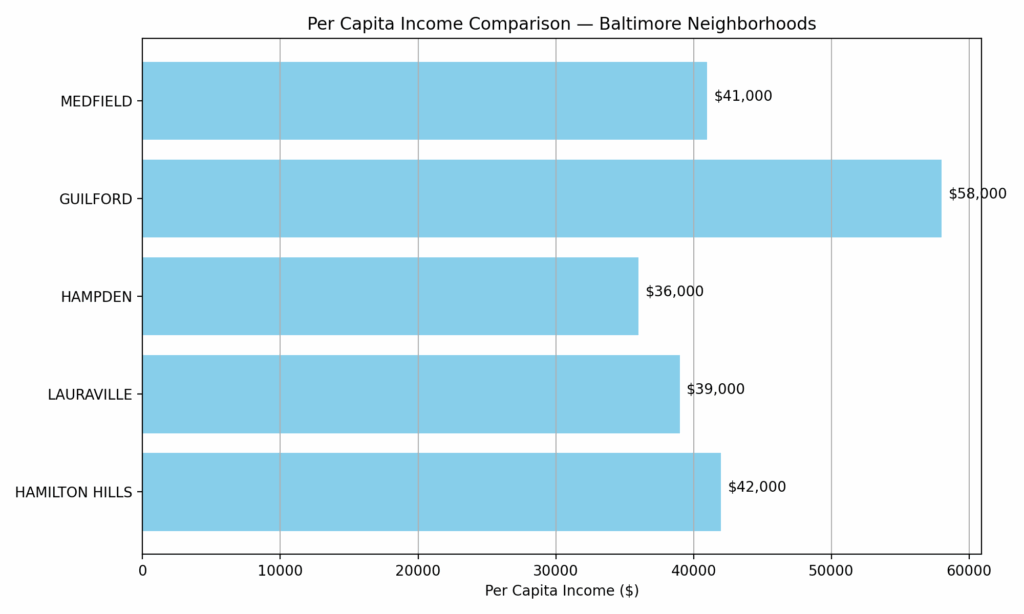
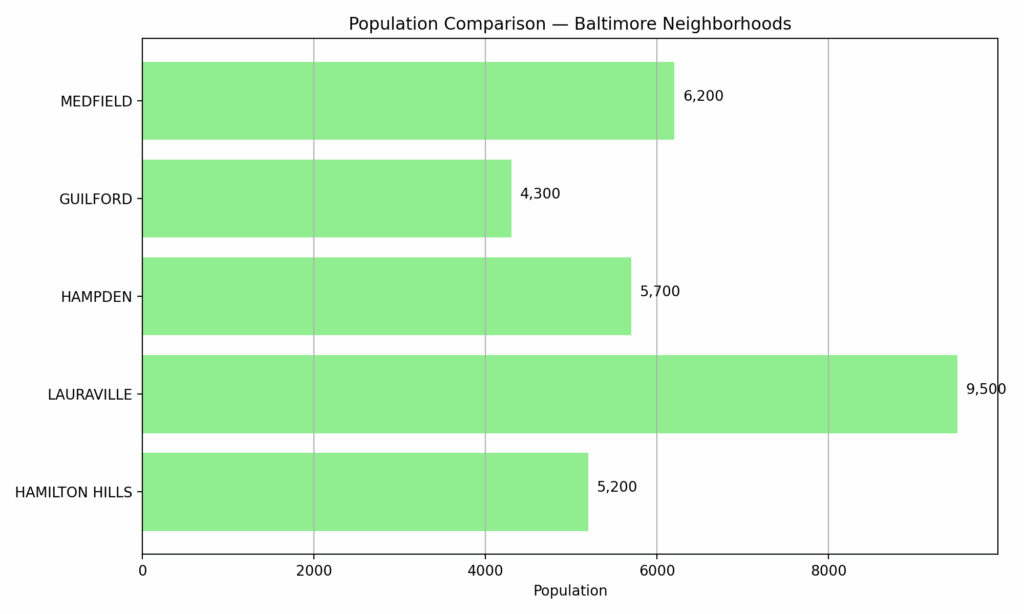
From an injury-law perspective, these conditions affect how fault is analyzed and how insurers argue about causation. A HAMILTON HILLS 21214 personal injury lawyer must be prepared to explain why a collision occurred—not just who was involved.
What Are Some Specific Personal Injury Claim Obstacles HAMILTON HILLS Residents Face?
Residents of HAMILTON HILLS often encounter predictable but frustrating obstacles after an accident:
- Disputed fault at residential intersections: Insurers may argue that low-speed residential crashes are “minor,” even when injuries are not.
- Pedestrian visibility arguments: Adjusters sometimes claim pedestrians “came out of nowhere” on poorly lit streets. This common “darting” defense is a daunting one under Maryland’s contributory negligence framework.
- Delayed medical care scrutiny: Because some injuries worsen over time, insurers may question why treatment wasn’t immediate. This may loom larger in Hamilton, with its easy proximity to quality medical care.
- Coverage confusion: Commuter accidents can involve multiple policies, including rideshare, uninsured or underinsured motorist coverage.
Understanding these patterns is most important when preparing a claim that can withstand scrutiny.
Baltimore Authority at the Neighborhood Level: HAMILTON HILLS, 21214
When an insurance company resists a claim arising in HAMILTON HILLS, it is not just contesting paperwork—it is contesting the lived reality of this neighborhood. From residential blocks feeding into larger commuter roads to intersections where traffic patterns change by time of day, I have spent years representing Baltimore residents injured in places exactly like the 21214 area. Whether a collision occurred near a neighborhood entry corridor or a pedestrian was struck while crossing a local street, the goal is the same: ensure that HAMILTON HILLS residents are not minimized, delayed, or unfairly dismissed by insurers who never set foot on these streets.
HAMILTON HILLS Roadways and Intersections
Is HAMILTON HILLS known for serious car accidents? The answer is more nuanced than a simple yes or no. While it does not experience the same volume of high-speed traffic as downtown corridors, accidents in HAMILTON HILLS often occur at predictable locations—and for predictable reasons.
Major Roads Affecting HAMILTON HILLS
Three roads play an outsized role in how accidents occur near HAMILTON HILLS:
- Harford Road – A major north-south artery connecting Baltimore City to Baltimore County. Changes in speed limits, frequent turns, and bus traffic contribute to rear-end and turning collisions.
(Harford Road) - Northern Parkway – A significant east-west route with higher traffic volumes and complex intersections that require careful signal timing.
(Northern Parkway) - Belair Road (U.S. Route 1) – While not running directly through every block, its proximity influences traffic flow and congestion patterns affecting nearby streets.
(Belair Road)
These roads funnel vehicles into and out of residential streets, creating conditions where turning movements, sudden stops, and pedestrian crossings are common sources of injury.
Key Intersections and Why Accidents Can Happen There
Certain intersections near HAMILTON HILLS demand attention in injury analysis:
- Harford Road and Northern Parkway: High traffic volume, multiple turning options, and inconsistent driver expectations.
- Residential street connections to Harford Road: Drivers accelerating to merge with traffic may overlook pedestrians or cyclists.
- Bus stop adjacency zones: Frequent stopping and starting increases rear-end collision risk.
Accidents here are often caused by:
- Speed differentials between residential and arterial roads
- Limited sightlines created by parked cars
- Driver distraction during merging or turning
From a legal standpoint, these factors help explain why a collision occurred—an explanation insurers often try to oversimplify.
HAMILTON HILLS Resources
- Baltimore City Department of Transportation – https://transportation.baltimorecity.gov/
- Baltimore City Police Department – Northeast District – https://www.baltimorepolice.org/
- Baltimore City Department of Public Works – https://publicworks.baltimorecity.gov/
- Maryland Courts – https://mdcourts.gov/
- Maryland Insurance Administration – https://insurance.maryland.gov/
HAMILTON HILLS Factors That Can Matter in Injury Claims
Local Factor 1: Arterial-Residential Transitions
Why it matters: Insurers often downplay responsibility where speed limits change abruptly, even though those transitions increase crash risk.
Hamilton Hills Personal Injury Lawyer Tips: #671: Maryland’s Boulevard Rule can give insurance adjusters looking to deny a claim outright an upper hand. The principles of the Boulevard Rule which embody Maryland’s harsh contributory negligence doctrine can sometimes mean the speed of the other vehicle is irrelevant.
Local Factor 2: Older Street Design
Why it matters: roadway layouts not designed for modern traffic volumes can support insurnace companies arguments about foreseeability and negligence.
Hamilton Hills Personal Injury Lawyer Tips: #558: To win in any Baltimore personal injury case an injured plaintiff must first show that the defendant was negligent. Factors that an insurance company, and their very excellent lawyers, can use to suggest that a a defendant was in fact not primarily in negligent can fuel case denials and defense verdicts.
Local Factor 3: Pedestrian Exposure Near Bus Routes
Why it matters: Frequent stopping and crossing activity increases the likelihood of pedestrian and bicycle accidents- in many instances guaranteeing a contributory negligence defense from the insurance company.
Frequently Asked Questions – HAMILTON HILLS (21214)
Yes. If you were injured in HAMILTON HILLS or while traveling through the 21214 area, Maryland law may allow you to pursue a claim. Venue rules in Maryland provide the generally the person causing the accident the defendant is sued where they live or work.
Uninsured motorist coverage may apply, depending on your policy. Uninsured motorist coverage in Maryland is mandatory but it can be waived, or, you can purchase an enhanced version. While Insurance risk and exposure analysis or not in my practice area, my standard recommendation is to purchase the greatest affordable coverage.
In Maryland the statue of limitations for negligence claims is 3 years. However important qualifiers apply. If the claim is against the state or a division of the states such as a local government entity or municipality special notice rules come into play- requiring notice of the potential claim to be given within one year.
Hamilton Hills Personal Injury Lawyer Tips: #898: Potentially there could be other fact specific legal doctrines that might alter a strict 3-year statute of limitations. Maryland has in some instances employed a “discovery rule” starting the clock running when the harm is discovered. The exceptions of course have their own limitations
Important qualifiers apply in this scenario as well. The insurance company Representatives that you speak to will always attempt to paint portray or just generally discuss your accident in terms of minor insignificant slight soft tissue or other words of minimization. Every motor vehicle accident causing personal injury or property damage- or both- has real consequences. No personal injury is minor to the one sustaining it.
Hamilton Hills Personal Injury Lawyer Tips: #8: It’s a go-to move for the bodily injury adjuster handling claims that come out of Hamilton Hills. This is a low speed impact + This is a residential area +there’s no property damage = there is no injury. There is a fix, but you have to take them to court.
Standard recommendations to Hamilton Hills residents follow the advice given to Baltimore denizen’s generally: you must notify your own insurance company immediately after the accident and cooperate with them fully.
How to Get to Eric T. Kirk
- Start in HAMILTON HILLS, Baltimore, Maryland 21214.
- Take local streets toward Harford Road.
- Follow Harford Road south toward downtown Baltimore.
- Continue toward North Calvert Street.
- Arrive at 1001 North Calvert Street, Baltimore, Maryland.
In Summary
A Personal Injury Lawyer serving HAMILTON HILLS 21214 must understand how neighborhood design, traffic flow, and insurance practices intersect. These cases are not abstract—they are rooted in real streets, real intersections, and real people. As a Baltimore Personal Injury Lawyer, my role is to analyze those facts carefully and present them clearly when insurers try to oversimplify or deny responsibility.
- Baltimore Personal Injury Trial Lawyer Eric T. Kirk
- Legal Analysis & Case Studies
- Baltimore Insurance Claims Denial Lawyer

For over three decades, I have battled against the nation’s largest insurance companies, always endeavoring to ensure my clients receive the compensation they deserve. As lead counsel in thousands of cases across Maryland, New York, and Florida, I have recovered millions for clients whose claims were wrongfully denied and delayed. Whether denying fair compensation for a personal injury victim or denying benefits to a homeowner, Insurance companies employ policy exclusions, technicalities, and lowball offers to deny and defeat claims. They also hire very good lawyers to fight you in court. So should you. When an insurance company unfairly rejects a claim, I stop them.

Client Review
"Eric Kirk was a great attorney to me. He settled my personal injury case in about 5 short months, and handled my complicated situation with professionalism and a great attitude. Eric handled everything with the insurance companies, and I didn’t have to lift a finger. I am so grateful for the work Eric put in, and it won us my case! I would recommend Eric’s firm to anyone in need of an awesome attorney. Thank you Eric!"
C. Delaney