
Martin Luther King Jr. Boulevard Car Accidents & Insurance Claims — Baltimore Roadway Law 101
TL;DR (Quick Takeaways):
- Martin Luther King Jr. Boulevard is a high-speed, multi-lane corridor with frequent lane shifts and merges.
- Crashes here routinely turn into insurance disputes, not quick resolutions.
- Adjusters focus on speed assumptions, lane positioning, and evidence timing.
- Lost roadway footage and delayed medical documentation are common leverage points for insurers.
Why Martin Luther King Jr. Boulevard Produces Disputed Accident Claims
Martin Luther King Jr. Boulevard is not a neighborhood street. It functions as a divided arterial designed to move traffic efficiently through central Baltimore, with limited access points, higher travel speeds, and fewer pedestrian crossings.
From an insurance standpoint, that design creates predictable issues:
- Speed assumptions made without reliable data
- Disputes over lane control during merges
- Limited witnesses due to roadway layout
- Fewer nearby businesses with usable surveillance
These factors give insurers room to challenge proof, even when injuries are well documented.
Common Crash Patterns on Martin Luther King Jr. Boulevard
Accidents on Martin Luther King Jr. Boulevard tend to follow repeat patterns:
- High-speed rear-end collisions during congestion transitions
- Lane-change and sideswipe crashes near entrances and exits
- Loss-of-control incidents tied to speed differentials
- Multi-vehicle impacts with conflicting damage patterns
These crashes often look serious—but insurers scrutinize them closely because speed and causation arguments can be difficult to prove without early evidence.
Why Insurance Companies Push Back on MLK Boulevard Claims
On Martin Luther King Jr. Boulevard cases, adjusters often focus on:
- Whether speed can be reliably established
- Whether lane positioning is provable
- Whether the damage pattern matches the injury claim
- Whether injuries are “consistent” with the reported mechanics
This shifts the claim from fault to process analysis.
Even when liability seems clear, insurers may delay by:
- Requesting reconstruction-level proof
- Questioning medical causation
- Arguing contributory negligence based on roadway design
Evidence Timing Problems Unique to Martin Luther King Jr. Boulevard
Unlike dense commercial corridors, Martin Luther King Jr. Boulevard has:
- Fewer storefront cameras
- Long stretches without private surveillance
- Reliance on traffic cameras that may not be retained
If evidence isn’t identified and preserved early:
- Video is overwritten or unavailable
- Witnesses are difficult to locate
- Reconstruction becomes speculative
From an insurance perspective, uncertainty equals leverage.
Medical Documentation & Claim Value on MLK Boulevard
Crashes on Martin Luther King Jr. Boulevard often involve:
- Higher speeds
- Delayed symptom recognition
- Emergency care followed by gaps in treatment
Insurance carriers frequently argue that:
- Injuries are exaggerated due to speed assumptions
- Treatment gaps undermine causation
- Symptoms developed independently of the crash
As with other arterial corridors, documentation timing often matters more than impact severity.
Martin Luther King Jr. Boulevard Insurance Law 101: What Drives Outcomes
Martin Luther King Jr. Boulevard Insurance Law 101: Claims are evaluated on provable mechanics, not assumptions.
Martin Luther King Jr. Boulevard Insurance Law 101: Adjusters challenge speed and lane-use without early evidence.
Martin Luther King Jr. Boulevard Insurance Law 101: Lost roadway footage weakens settlement leverage.
Martin Luther King Jr. Boulevard Insurance Law 101: Treatment gaps invite causation disputes.
Martin Luther King Jr. Boulevard Insurance Law 101: Juries—not insurers—decide value when cases proceed.
Why Martin Luther King Jr. Boulevard Works as a Roadway Authority Page
This corridor cuts through multiple zones without belonging to any single neighborhood, making it ideal as:
- A roadway-level authority anchor
- A hub linking to neighborhood and intersection pages
- A base for speed- and reconstruction-focused explainers
- A foundation for video transcripts and FAQs
This page is designed to anchor your arterial-roadway strategy.
Frequently Asked Questions About MLK Boulevard Accidents
Why are Martin Luther King Jr. Boulevard accident claims often disputed?
Because insurers challenge speed, lane positioning, and causation without early evidence.
Does the lack of nearby businesses affect claims?
Yes. Fewer cameras often mean less independent video evidence.
Are high-speed crashes treated differently by insurers?
They are scrutinized more closely due to damage-to-injury consistency arguments.
Can insurers delay even serious MLK Boulevard injury claims?
Yes. Delay tactics often focus on reconstruction demands and medical causation.
What most commonly reduces claim value?
Lost video evidence, unproven speed assumptions, and treatment delays.
Martin Luther King Jr. Boulevard Is a Proof Corridor
Claims from Martin Luther King Jr. Boulevard don’t stall because injuries aren’t real.
They stall because insurers exploit evidence gaps inherent in high-speed arterial design.
Understanding that early changes how cases are handled.
Nearby Neighborhoods
<!– Intentionally left blank per standing order; user will add manually –>
- Baltimore Personal Injury Trial Lawyer Eric T. Kirk
- Legal Analysis & Case Studies
- Baltimore Insurance Claims Denial Lawyer
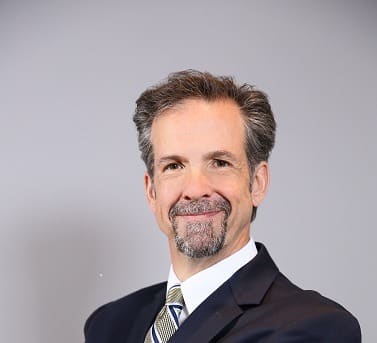
For over three decades, I have battled against the nation’s largest insurance companies, always endeavoring to ensure my clients receive the compensation they deserve. As lead counsel in thousands of cases across Maryland, New York, and Florida, I have recovered millions for clients whose claims were wrongfully denied and delayed. Whether denying fair compensation for a personal injury victim or denying benefits to a homeowner, Insurance companies employ policy exclusions, technicalities, and lowball offers to deny and defeat claims. They also hire very good lawyers to fight you in court. So should you. When an insurance company unfairly rejects a claim, I stop them.